
Technology
The next chapter on our plate.
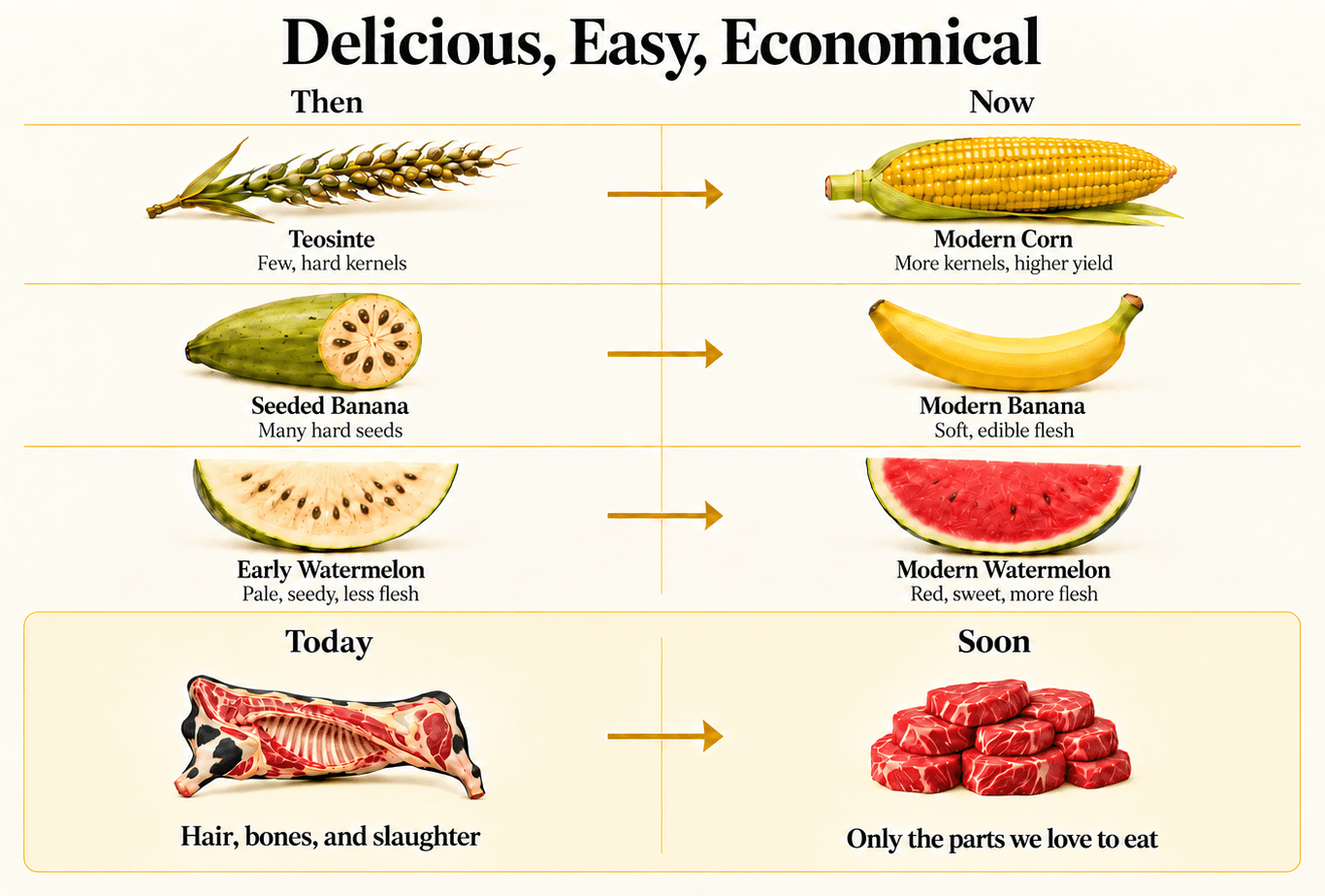
A few tough kernels on a wild grass. A banana crowded with hard seeds. A watermelon with little sweetness to offer. Familiar foods once looked very different. Across generations, growers selected, bred, and transformed them, pursuing pleasures and practicalities we still recognize: delicious food, less effort, abundance.
Cultivated meat takes that pursuit to a new scale: the cell. Engineering gives us a way to shape the qualities we prize and grow the parts we want to eat, without raising and slaughtering a whole animal. A new possibility in a long human story of making food more enjoyable, nourishing, and affordable.
The tech exists. Scale is the challenge.
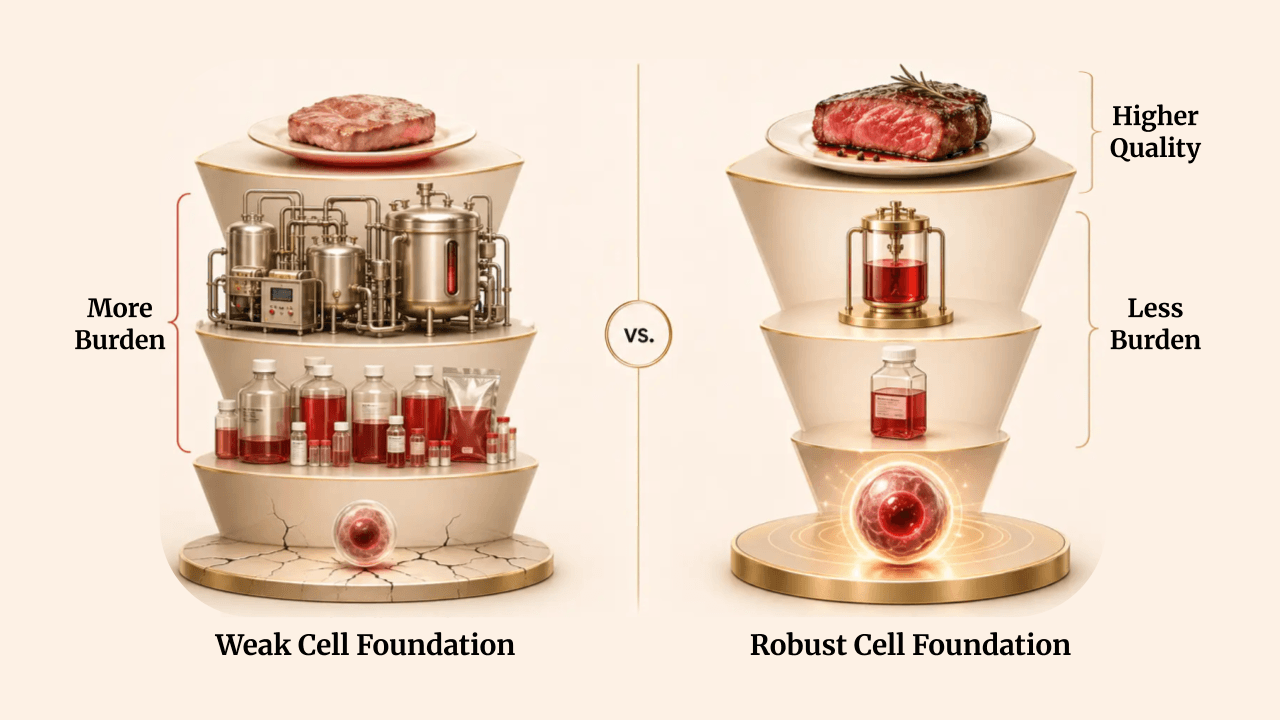
Cell-based animal products have been realised. But reaching industrial scale depends on three core levers: media cost, bioprocess design, and cell-line performance.
The cell line lies at the foundation, where better performance can create compounding gains throughout the entire system. Better-designed cells can reduce the burden on media and bioprocessing while improving the traits that matter most in the final product.
The cells are our sole focus at Livestock Labs.
The promise of better meat starts with better cells.
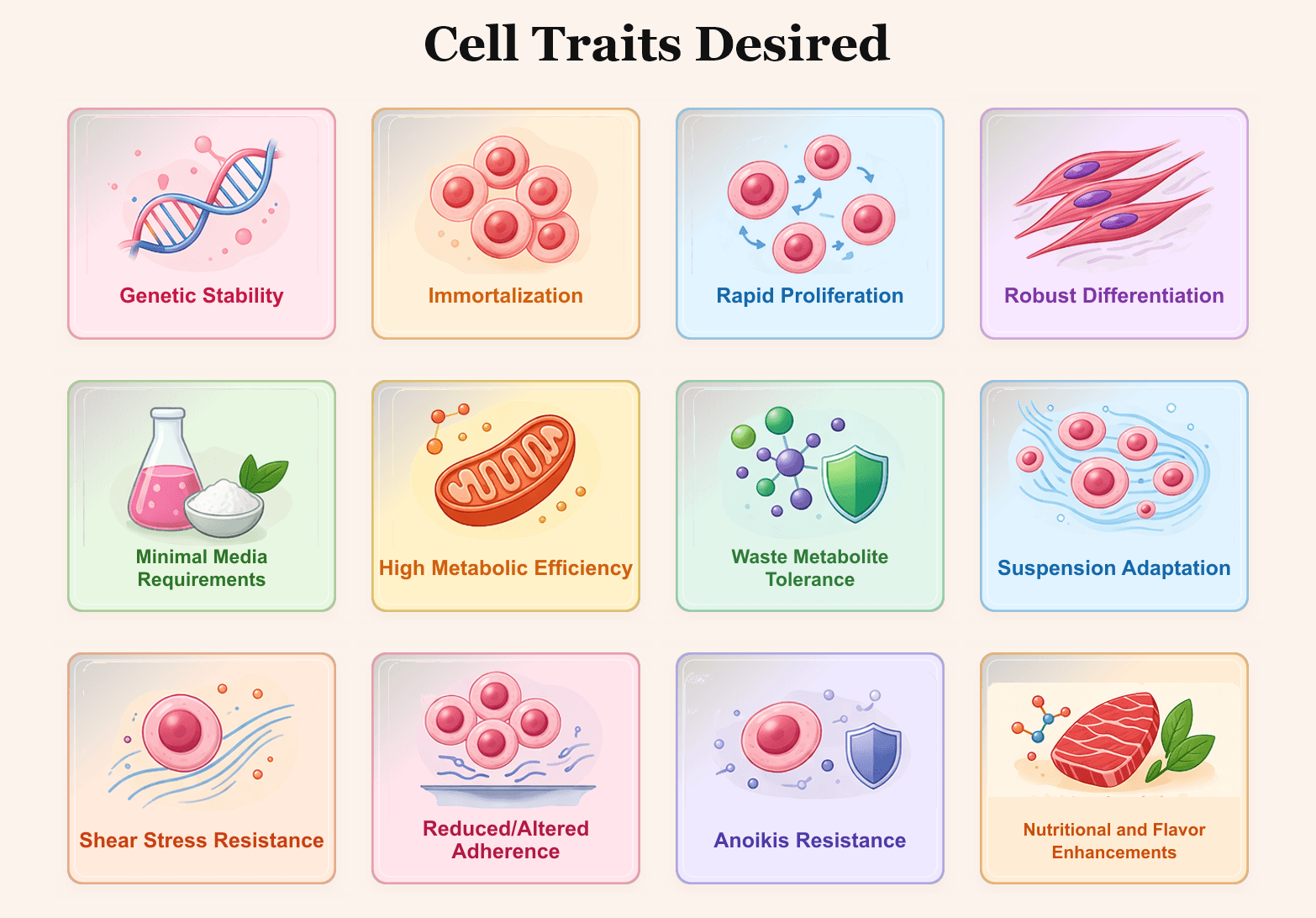
Delicious, nutritious meat at a price people can afford. Delivering on that promise requires cells that grow efficiently, need fewer costly ingredients, and produce the qualities people want to eat.
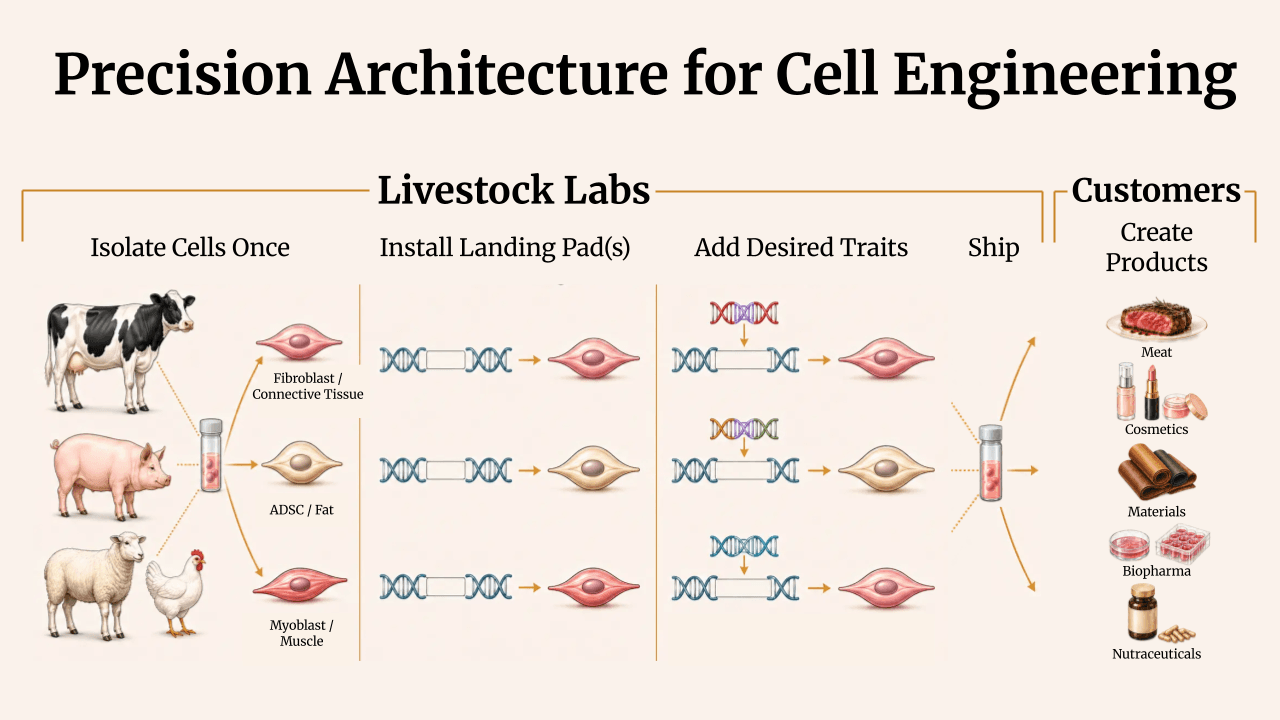
Our proprietary technology is designed to build those traits into the cells themselves. We create precise “docking sites” in their DNA, where genetic instructions can be added or exchanged.
That means we can keep improving the same cell line as new opportunities emerge. Each advance builds on the last, creating an adaptable foundation that cultivated meat producers can use to develop better products.
Less complexity, better products.
By engineering more of the solution into the cells themselves, we can reduce complexity across media and bioprocessing. The result is a robust path to animal products with better flavor, better nutrition, and better economics.